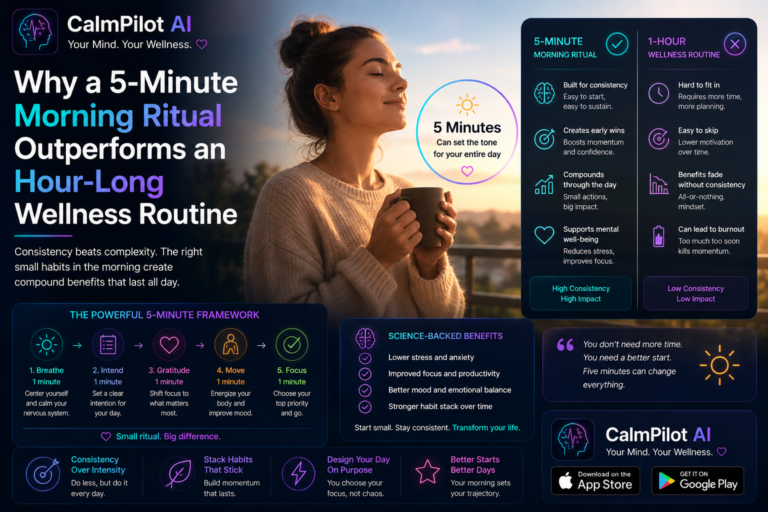
An elaborate morning routine sounds impressive but it rarely survives contact with real life. Behavioural science explains why a consistent 5-minute ritual produces
more lasting mental health benefits than an hour-long programme you only manage a few times a week. Here is the research, and how to build yours.
Blog
Latest Posts
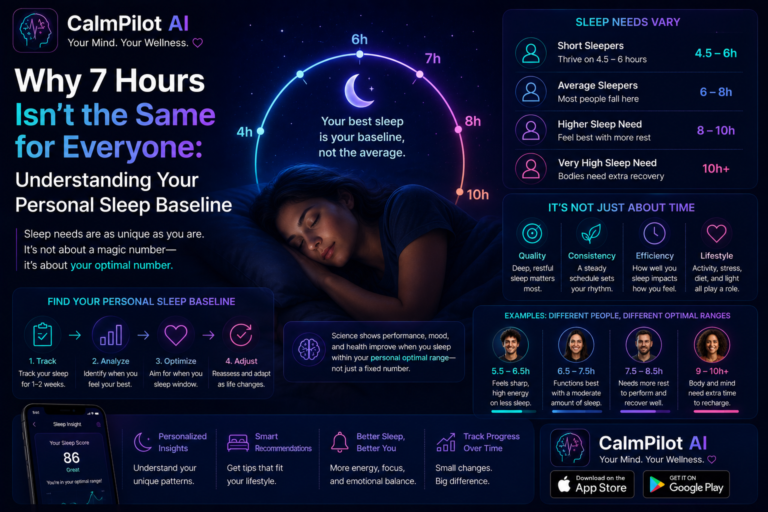
Why 7 Hours Isn’t the Same for Everyone: Understanding Your Personal Sleep Baseline
The “7–8 hours” sleep rule is a population average not a personal prescription. Your true sleep need is shaped by your genetics, chronotype, and sleep quality in ways that no single number can capture. Here is how to find your actual baseline and build your life around it.
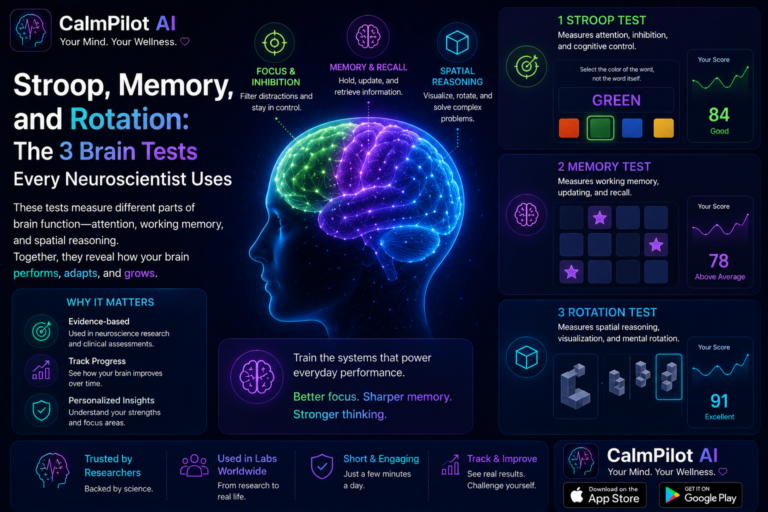
Stroop, Memory, and Rotation: The 3 Brain Tests Every Neuroscientist Uses
The Stroop test, working memory tasks, and mental rotation assessments are three of the most widely used tools in cognitive neuroscience and for good reason. Each one measures a distinct pillar of brain performance. Here is what they reveal about your mind, why researchers trust them, and how you can train each one.
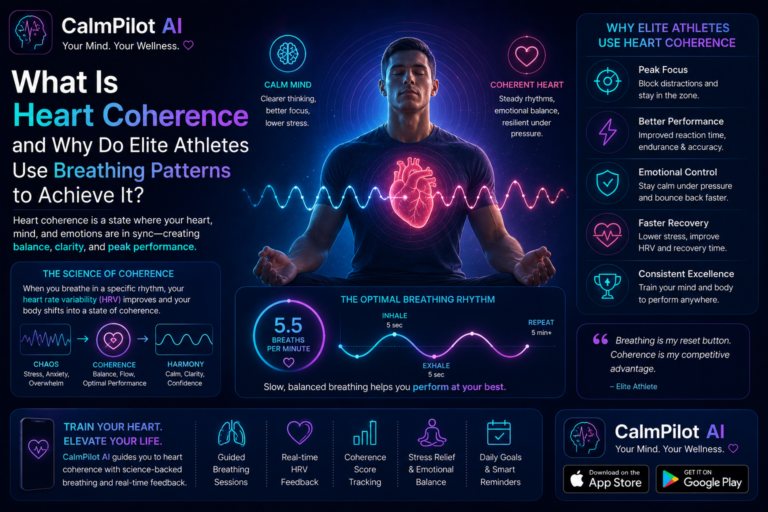
What Is Heart Coherence and Why Do Elite Athletes Use Breathing Patterns to Achieve It?
Heart coherence is the physiological state elite athletes deliberately engineer before competition and a simple 5-second breathing rhythm is all it takes to achieve it. Discover the science of HRV, resonance breathing, and why the world’s best performers train their nervous systems, not just their bodies.
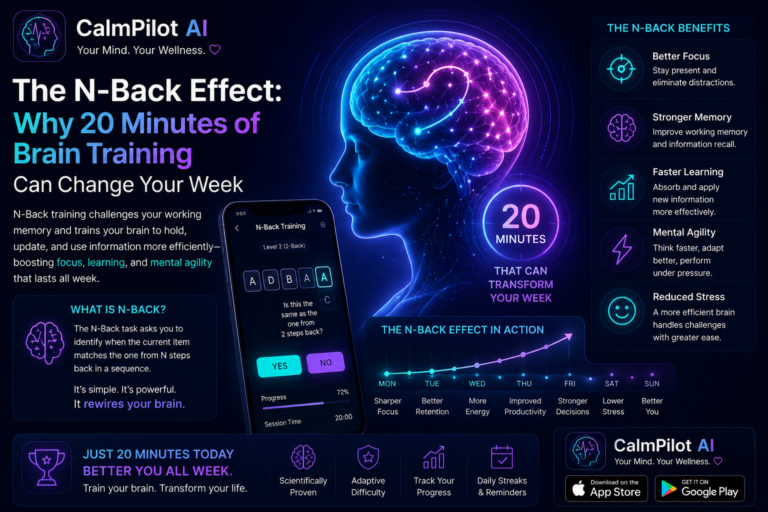
The N-Back Effect: Why 20 Minutes of Brain Training Can Change Your Week
The N-Back task is one of the only brain training exercises with peer-reviewed evidence for improving fluid intelligence — not just performance on the task itself. Here’s the science, what it changes, and why 20 minutes a day is enough.
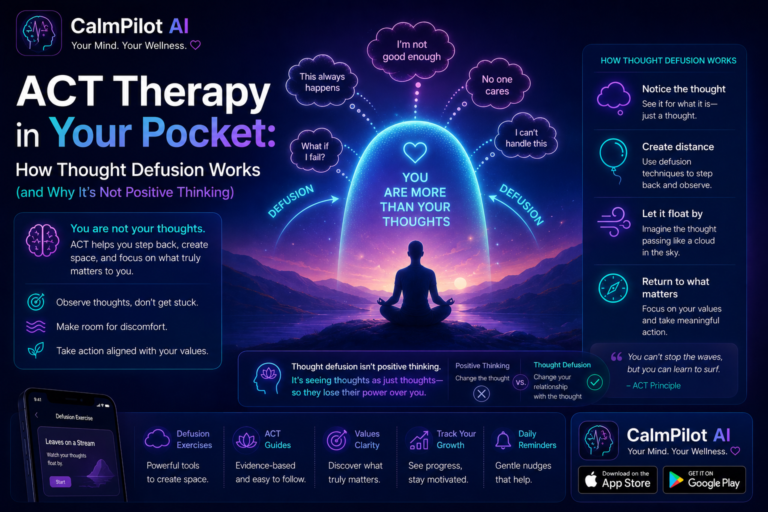
ACT Therapy in Your Pocket: How Thought Defusion Works (and Why It’s Not Positive Thinking)
Positive thinking tells you to replace bad thoughts with good ones. ACT therapy’s thought defusion does something more powerful — it changes your relationship with thoughts entirely, so they lose their grip whether they’re true or not.
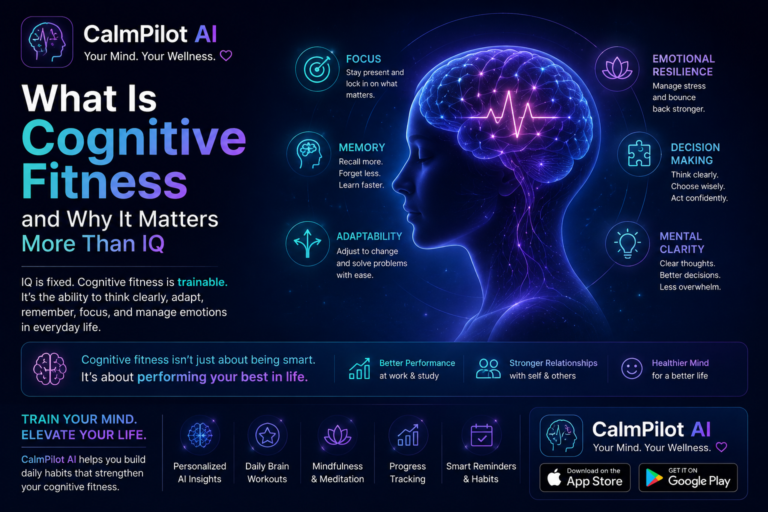
What Is Cognitive Fitness and Why It Matters More Than IQ
IQ measures what you were born with. Cognitive fitness measures how well your brain performs right now and unlike IQ, it responds directly to how you live, sleep move, and train. Here’s what it is and why it matters more.
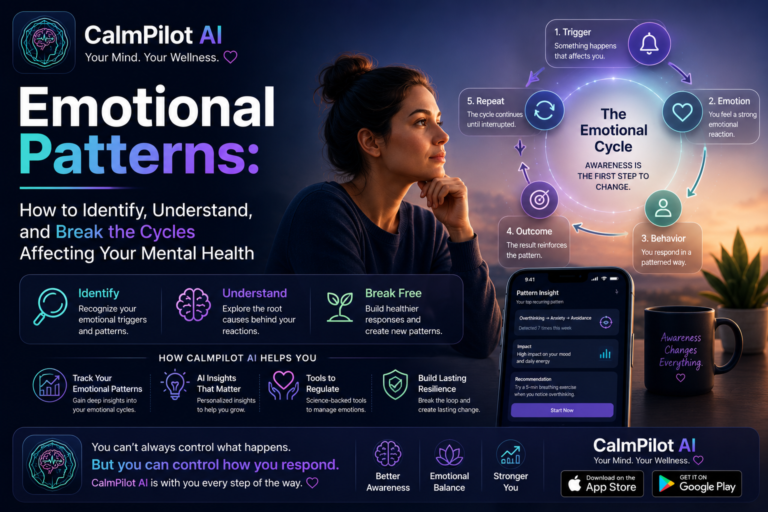
Emotional Patterns: How to Identify, Understand, and Break the Cycles Affecting Your Mental Health
Most emotional struggles aren’t random they’re patterns. The same triggers, the same responses, the same aftermath, repeating. Learning to identify your emotional patterns is the first step to changing them.
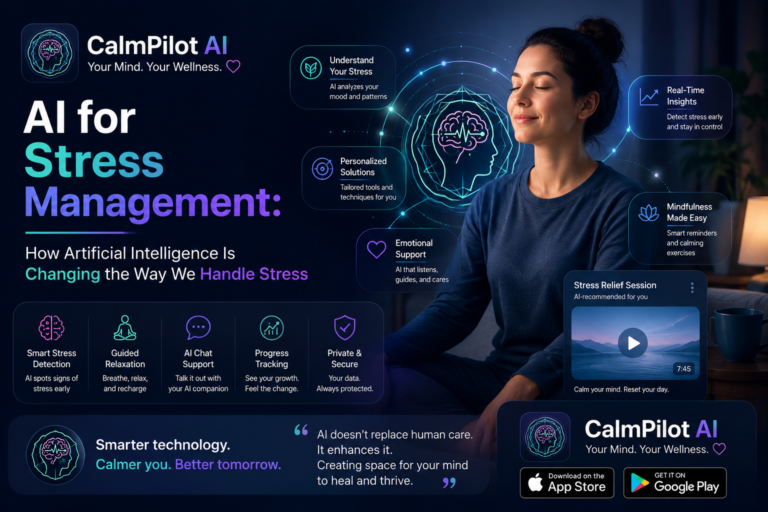
AI for Stress Management: How Artificial Intelligence Is Changing the Way We Handle Stress
AI is transforming stress management — from mood tracking that spots patterns before you do, to AI companions available at 2am when no one else is. Here’s how it actually works and what the science says.