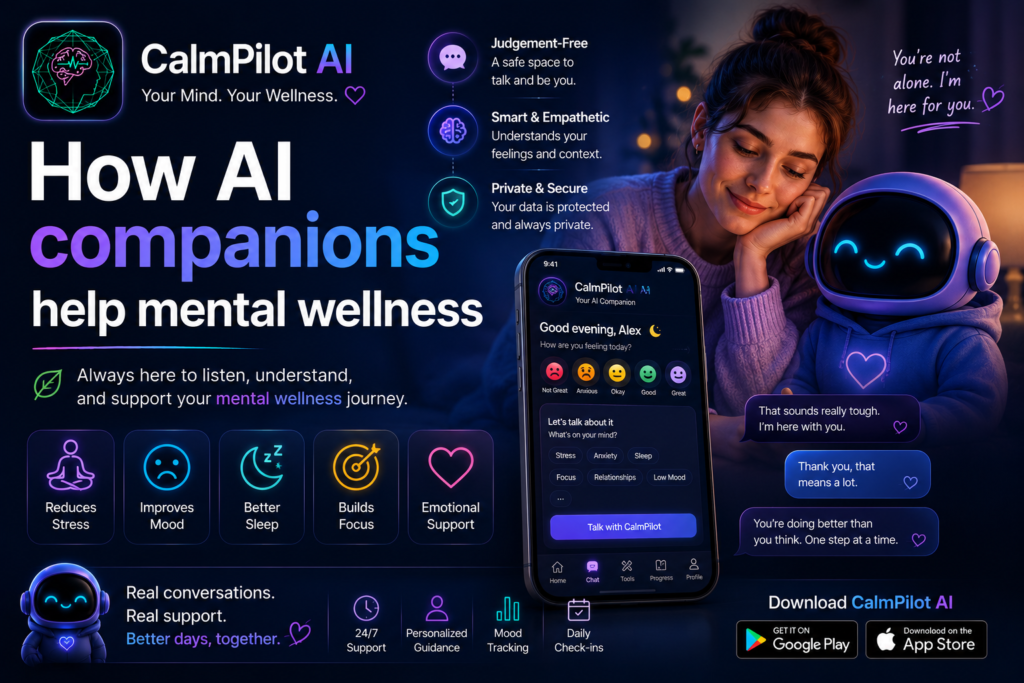
It’s 2 am. You can’t sleep. Your mind is running through a conversation that happened three days ago, and the anxiety is building. You don’t want to wake anyone up. You don’t have a therapy appointment until Thursday. And searching your symptoms online — you already know how that ends.
This is the gap that AI companions are built for. Not to replace therapists, doctors, or the people in your life — but to be present in the moments when nothing else is. Here’s what the research and real-world use actually shows about how they help.
1. They’re Available When Human Support Isn’t
The average wait time for mental health support in many countries is weeks to months. Even for people already in therapy, sessions happen once a week — which leaves 167 hours between appointments where difficult moments can arise.
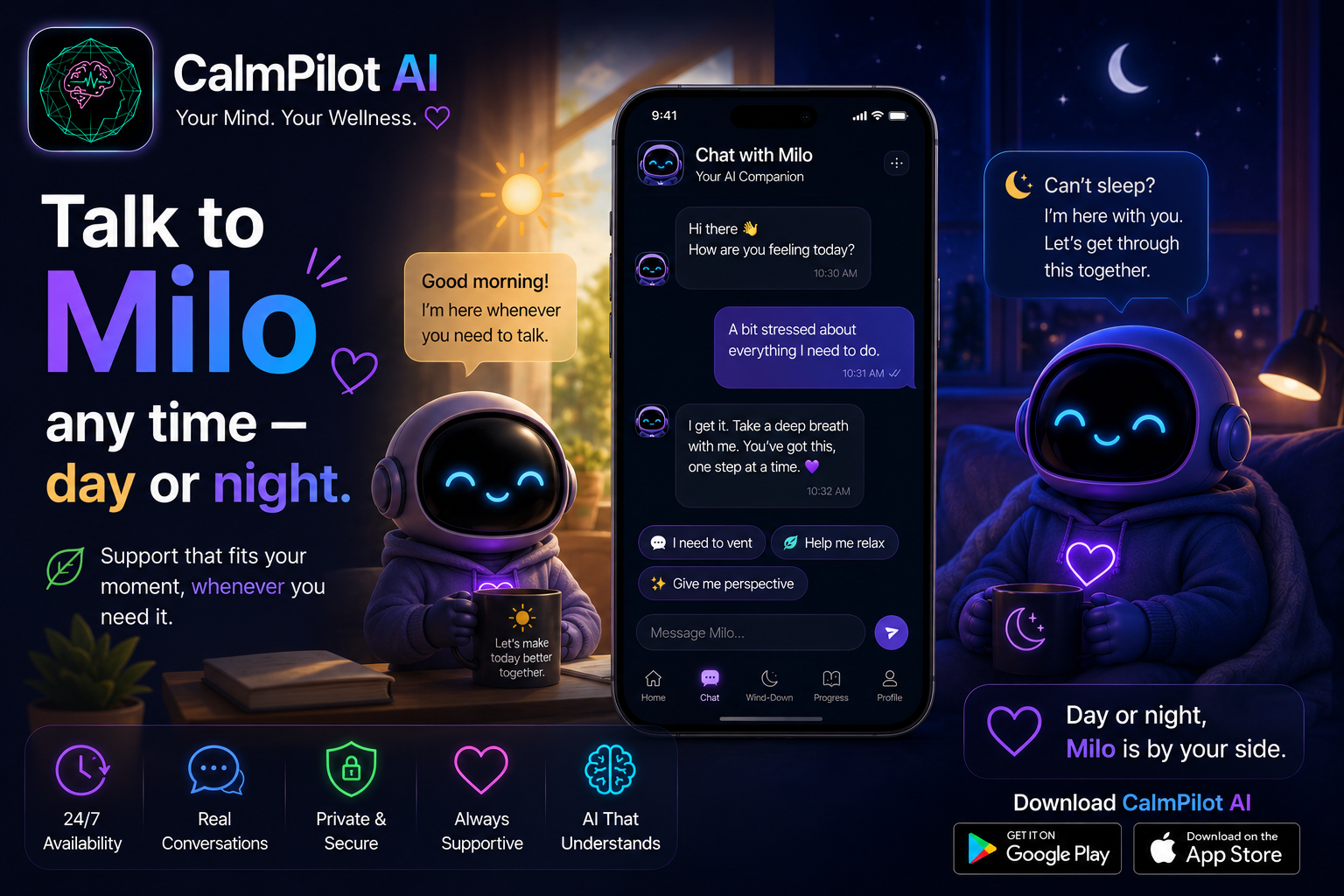
AI companions don’t have waiting lists, office hours, or bad days. They’re available at 3 am, during a lunch break, immediately after a panic attack, or in the five quiet minutes before a stressful meeting. That availability alone changes the dynamic of how people manage their mental health — from reactive (crisis only) to ongoing (daily check-in).
The most powerful thing about an AI companion isn’t that it’s intelligent. It’s that it’s always there.
2. They Remove the Fear of Judgment
One of the biggest barriers to seeking mental health support is shame. People worry about being judged, misunderstood, or seen differently by the people they care about. Even in therapy, some clients hold back — editing what they share based on how they think they’ll be perceived.
With an AI companion, that barrier disappears. There’s no social consequence to saying something embarrassing, contradictory, or dark. Users consistently report feeling more honest with an AI than they would in a human conversation — not because the AI is better, but because the judgment risk is zero.
This psychological safety unlocks something important: people say what they actually feel, rather than a curated version of it. And that honesty is where insight begins.
3. They Help You Name and Process Emotions
Many people struggle not with their emotions, but with identifying them. They know something feels wrong — but they can’t articulate what, or why. This is called emotional granularity, and research shows that people with higher emotional granularity handle stress and adversity significantly better.
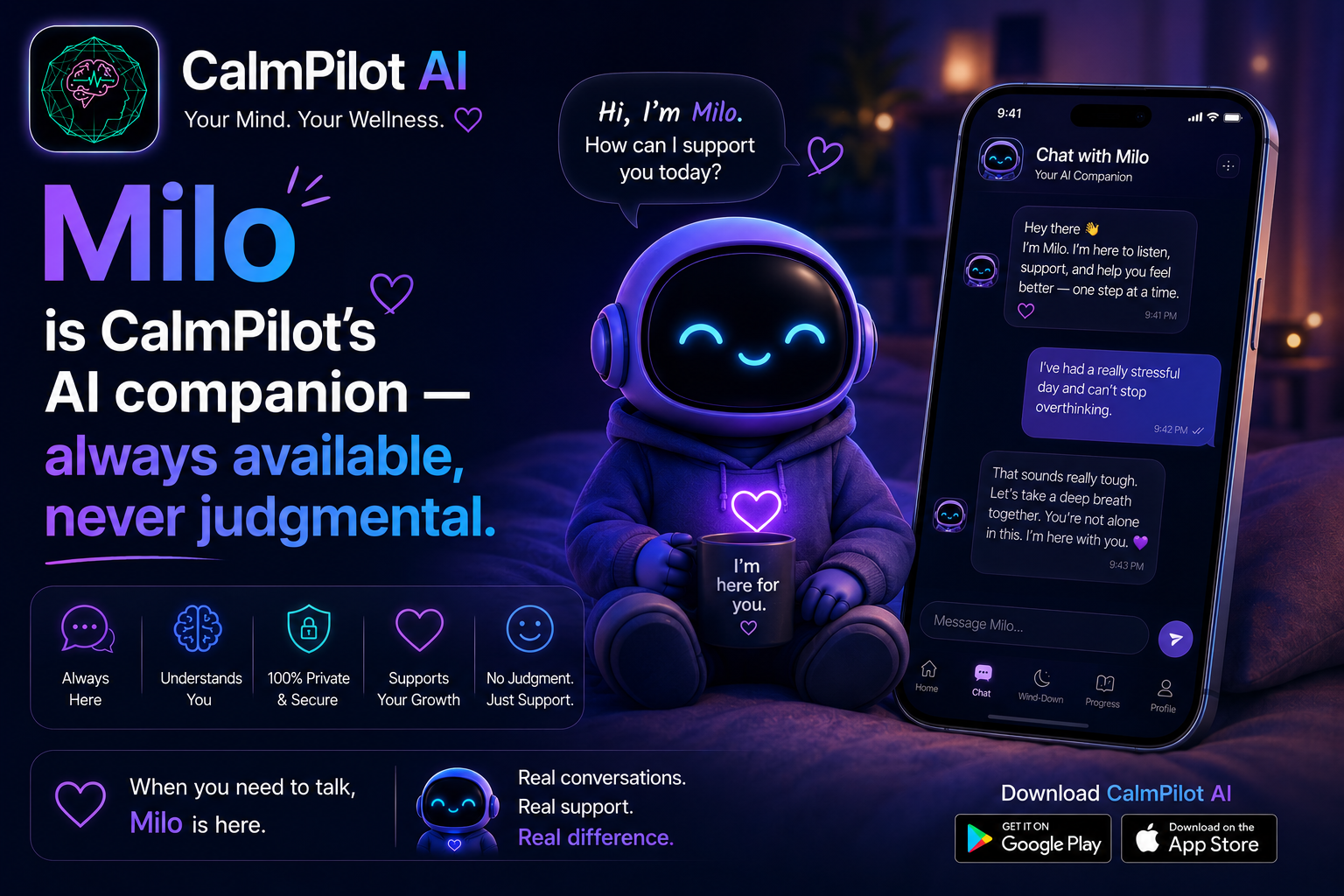
A good AI companion asks questions that help you get specific. Instead of staying at “I feel bad,” a conversation with Milo might move you toward “I feel overlooked, and underneath that there’s a fear that what I do doesn’t matter.” That specificity isn’t just more accurate — it activates the prefrontal cortex, the rational brain, and reduces the intensity of the amygdala’s alarm response.
Naming the feeling is itself a therapeutic act. AI companions make that process accessible at any moment.
4. They Create a Low-Stakes Space to Practise
Therapy teaches skills — boundary-setting, cognitive reframing, self-compassion, identifying distorted thinking. But skills need practice to stick, and the real world rarely offers a safe rehearsal space.
AI companions provide exactly that. You can work through an upcoming difficult conversation, practise articulating a boundary you’ve been struggling to set, or explore a negative thought pattern without the pressure of someone evaluating your progress. It’s the mental health equivalent of practising a presentation out loud before you give it.
Over time, these low-stakes conversations build real fluency — so when the high-stakes moments arrive, the skills are already there.
5. They Spot Patterns You Can’t See Yourself
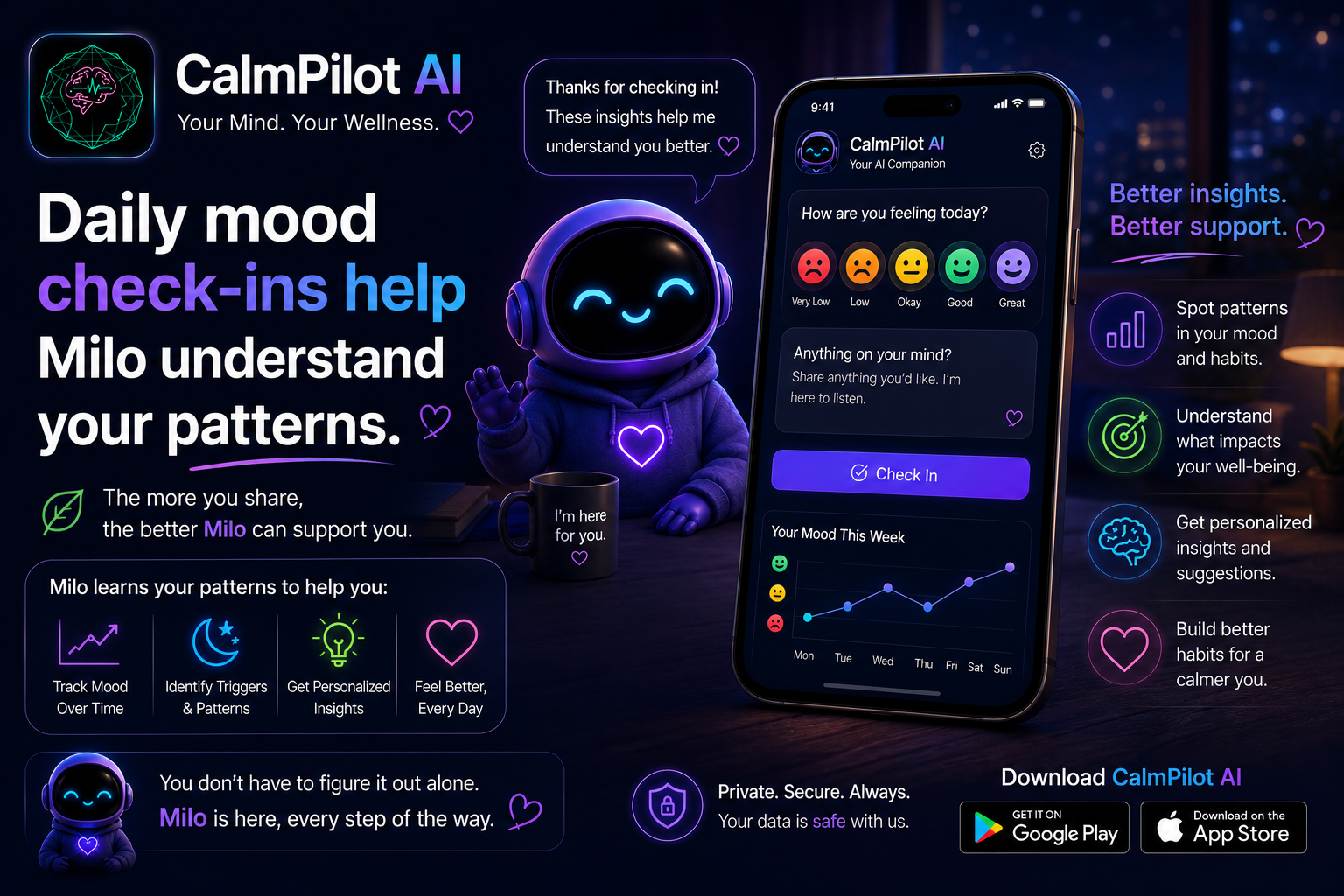
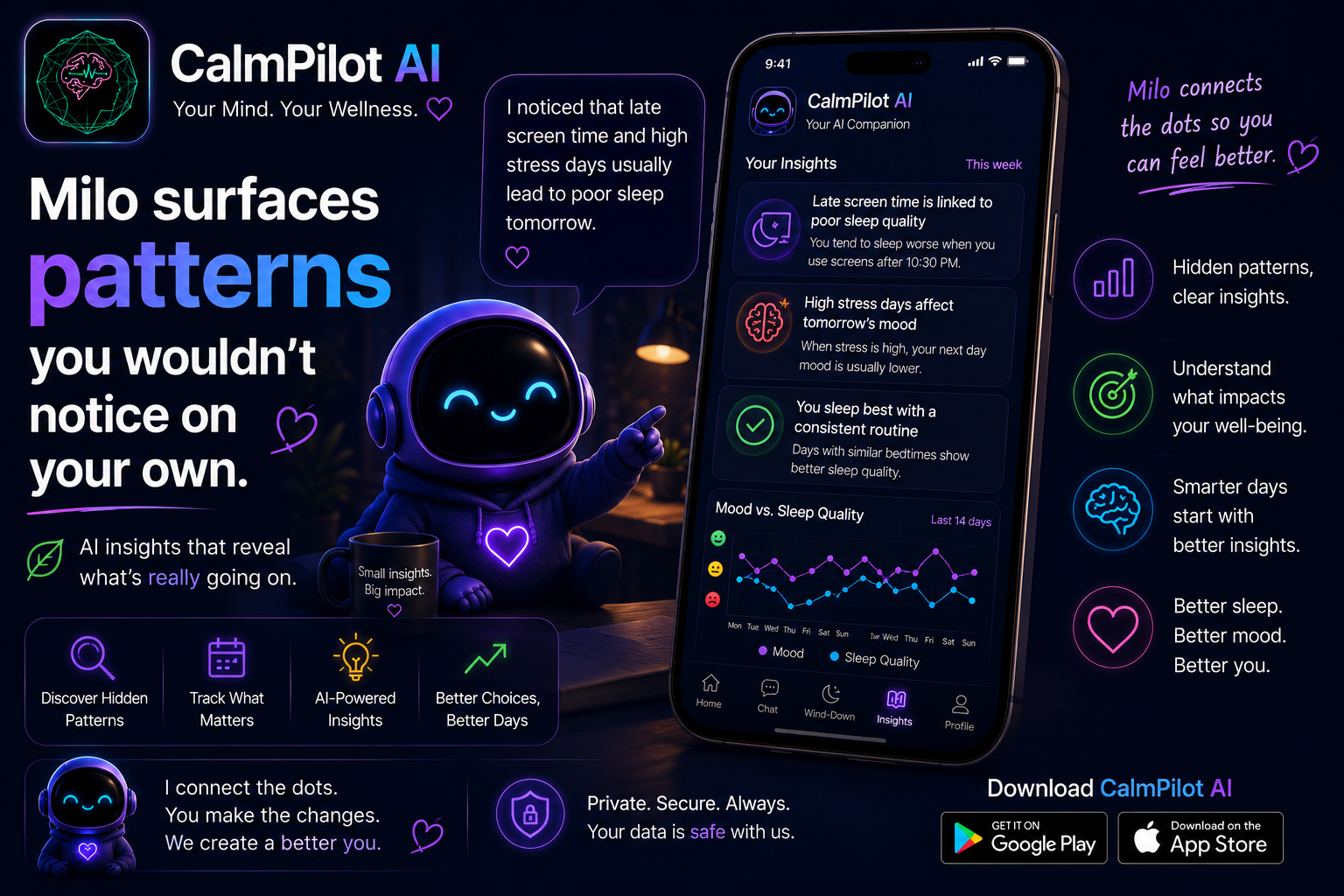
One of the hardest things about managing your own mental health is that you’re inside your own head. You can’t see the patterns — the recurring triggers, the specific times of day or week when things get harder, the emotional cycles that repeat month after month.
AI companions that track mood and conversation history over time can surface these patterns back to you. “You’ve mentioned feeling overwhelmed on Sunday evenings several times this month” is a different kind of insight than anything you’d generate alone. It turns subjective experience into data — and data into action.
6. They Complement — Not Replace — Human Care
It’s worth being clear about what AI companions are not. They are not therapists. They cannot diagnose, prescribe, or provide clinical treatment. In a genuine mental health crisis, a human professional is irreplaceable.
But the binary framing of “AI or therapy” misses the point. For the vast majority of people, the choice isn’t between an AI companion and a therapist — it’s between an AI companion and nothing. Between having somewhere to process a hard day and carrying it alone.
Used well, an AI companion makes you a better therapy client — because you arrive having already reflected, already named what’s happening, already done some of the first-layer processing. The session goes deeper, faster.
7. They Reduce the Activation Energy for Self-Care
One of the cruelest features of poor mental health is that it reduces your capacity for the very activities that would help — exercise, journalling, reaching out, reflecting. Everything feels like too much effort.
An AI companion lowers the activation energy. You don’t have to schedule anything, travel anywhere, or perform wellness. You open an app, type a sentence, and something starts. That low threshold matters enormously when your resources are depleted.
Small, consistent contact — even a two-minute check-in — is more effective for emotional regulation than occasional intensive effort. AI companions make that consistency achievable on the hardest days, not just the easy ones.
The Honest Picture
AI companions are not magic. They work best when used consistently, with realistic expectations — as a daily support layer, not a crisis intervention service. They are a tool: powerful when used well, limited when used as a substitute for human connection or professional care.
But for millions of people who have no access to regular mental health support, or who simply need somewhere quiet and non-judgmental to process their inner world — an AI companion isn’t a compromise. It’s the thing that makes the difference between carrying it alone and not having to.
That’s what Milo is built for. Not to replace the people in your life. Just to be there when they can’t be.