
You sit down to work. You open the right tab, set the intention — and within four minutes you’re reading about deep-sea fish. Sound familiar? Poor focus isn’t a character flaw. It’s a signal: your brain is either under-resourced, over-stimulated, or both.
The good news is that attention is a trainable skill, not a fixed trait. These eight methods strengthen your focus at the biological level — no nootropics, no expensive gear, no willpower required.
1. Design Your Environment Before You Start
Your surroundings shape your attention more than your intentions do. Research from the University of California found it takes an average of 23 minutes to fully regain deep focus after a single interruption. The most effective thing you can do isn’t train harder — it’s remove the interruptions before they happen.
- Put your phone in another room, not face-down on your desk
- Use a browser extension to block social feeds during focus blocks
- Close all tabs unrelated to the current task
- Tell people around you when your focus block starts and ends
Willpower is a finite resource. Don’t waste it fighting temptation — eliminate it.
2. Work With Your Ultradian Rhythm (Not Against It)
Your brain naturally cycles between high-focus and lower-focus states roughly every 90 minutes. These are called ultradian rhythms, and they govern alertness, creativity, and concentration throughout the day.
Working in 90-minute blocks — followed by a genuine 15–20 minute break — aligns your effort with biology instead of fighting it. The Pomodoro method (25 min on, 5 min off) works on the same principle at a smaller scale and suits people who struggle with longer blocks at first.
The brain is not designed for eight hours of uninterrupted focus. It’s designed for bursts of deep work separated by genuine rest.
During breaks: step away from screens, move your body, or simply let your mind wander. Mind-wandering isn’t wasted time — it’s when your brain consolidates what it just processed.
3. Move Before You Need to Focus
Exercise is the most underused focus tool available. A single bout of aerobic movement — even a 20-minute walk — raises levels of BDNF (brain-derived neurotrophic factor), dopamine, and norepinephrine. These are the same chemicals that ADHD medications work on, released naturally.
The effect peaks 1–2 hours after exercise and lasts for several hours. If you schedule your most demanding cognitive work after movement, you’re starting with a neurochemically primed brain.
You don’t need a gym. A brisk 20-minute walk, a short bike ride, or even 10 minutes of jumping and bodyweight movement produces measurable improvements in attention and working memory.
4. Protect Your Sleep Like It’s Your Job
Sleep isn’t passive recovery — it’s when your brain cleans itself. The glymphatic system, which clears metabolic waste from brain tissue, is almost entirely active during sleep. Skimp on sleep and you start the next day with a foggy, cluttered brain that struggles to filter irrelevant information.
Even a single night of six hours sleep (versus eight) produces a cognitive deficit equivalent to 24 hours without sleep — and most people don’t notice the impairment because sleep deprivation also impairs self-assessment.
Focus-protective sleep habits:
- Keep a consistent wake time, even on weekends
- Avoid screens for 60 minutes before bed (blue light suppresses melatonin)
- Keep your bedroom cool — 17–19°C is the optimal range for deep sleep
- Avoid caffeine after 2 pm; its half-life is 5–6 hours
5. Eat for Stable Energy, Not for Pleasure
Focus requires a steady supply of glucose to the prefrontal cortex. The problem isn’t how much you eat — it’s the shape of your blood sugar curve. Spiky high-sugar meals cause a rapid rise followed by a crash that tanks concentration for 1–2 hours.
Foods that support sustained focus:
- Omega-3 fatty acids (oily fish, walnuts, flaxseed) — essential for neurotransmitter function
- Slow-release carbohydrates (oats, legumes, brown rice) — steady glucose without spikes
- Dark leafy greens (spinach, kale) — high in folate, which supports dopamine production
- Water — even mild dehydration (1–2%) measurably impairs working memory and attention
The simplest rule: eat meals that don’t make you sleepy an hour later.
6. Train Single-Tasking Like a Skill
Multitasking doesn’t exist. What the brain actually does is rapidly switch between tasks — and each switch costs time, energy, and accuracy. Studies show that people who frequently multitask are actually worse at filtering irrelevant information than people who rarely do it, because the habit rewires your attentional filters.
Single-tasking is a trainable muscle. Start with 10 minutes of doing one thing with full attention. No switching, no checking. Extend by 5 minutes each week. The discomfort you feel in the first few minutes is your brain pulling toward distraction — sitting with it, rather than following it, is the training.
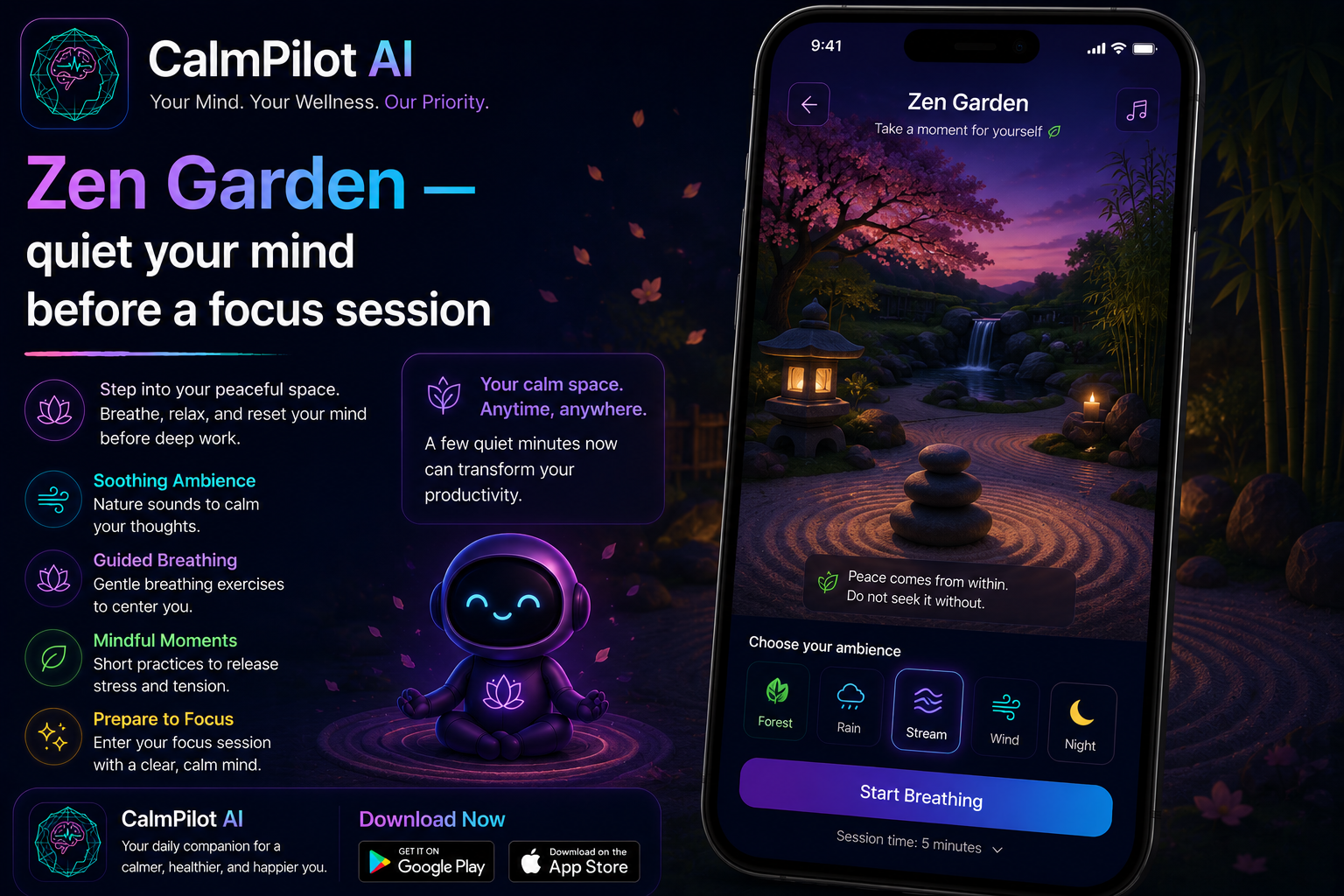
7. Use Mindfulness to Reset a Scattered Mind
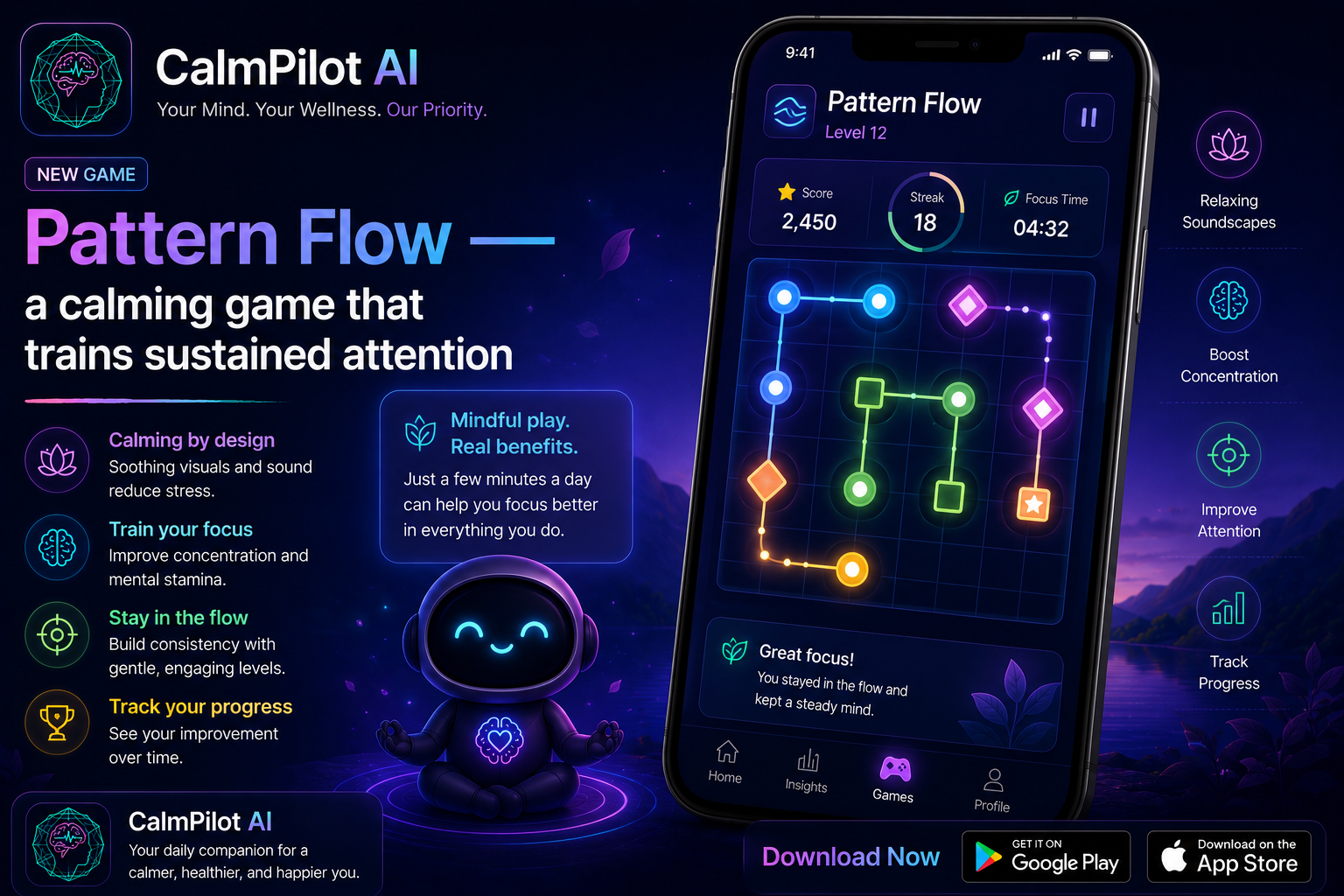
You don’t need to meditate for 40 minutes at dawn. A 5-minute mindfulness reset between tasks is enough to clear mental residue from the previous task and prime attention for the next one. This is called “attentional resetting” — and it’s one of the most researched benefits of brief mindfulness practice.
A simple reset:
- Close your eyes and take three slow breaths.
- Notice where your body is tense — jaw, shoulders, hands — and release.
- Set a clear single intention for the next block: “For the next 45 minutes, I am only working on X.”
- Open your eyes and start before the urge to check anything arises.
The intention-setting step is critical. Vague intentions (“I’ll work on the project”) produce vague attention. Specific intentions produce specific focus.
8. Track Your Mood — Focus Follows Emotional State
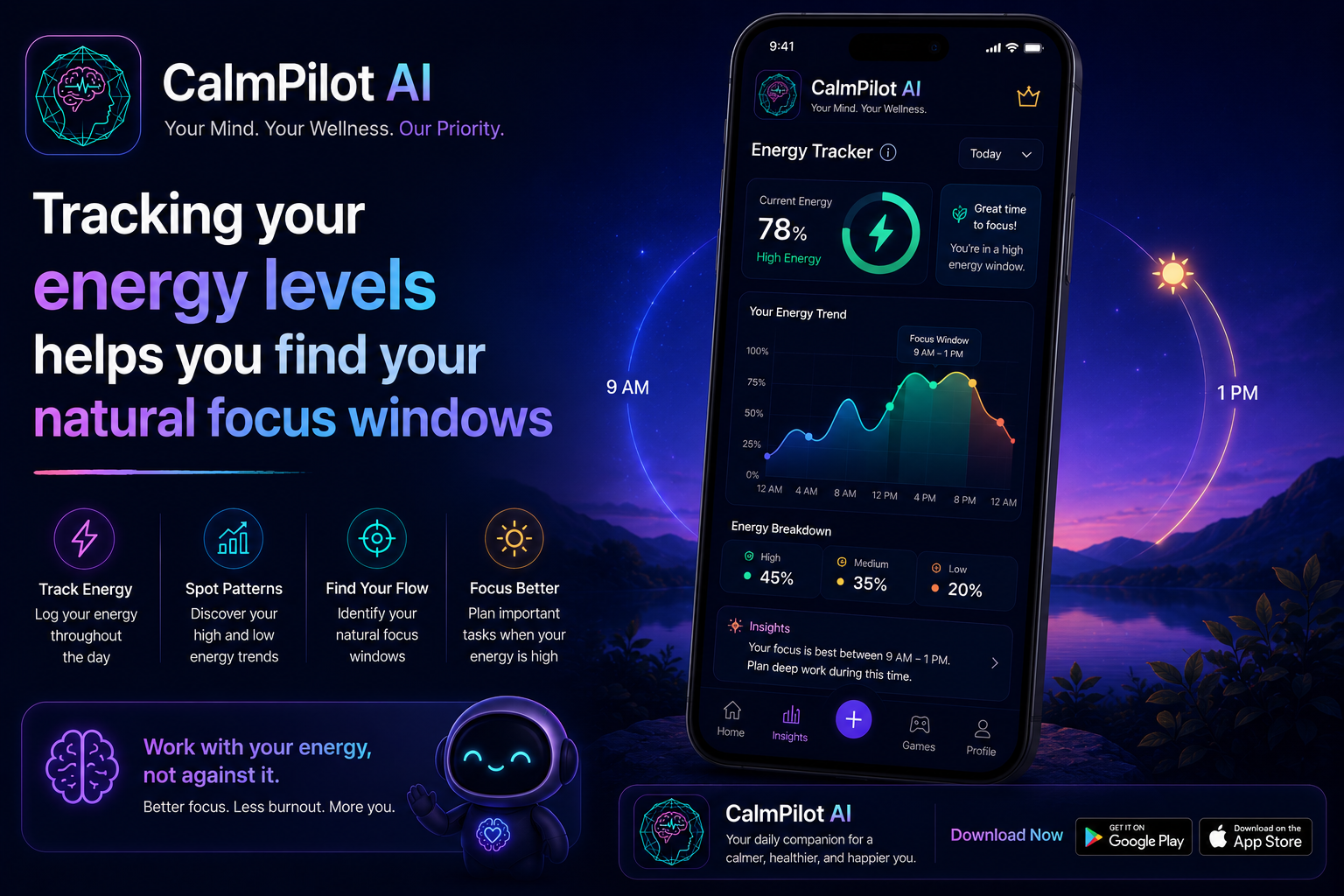
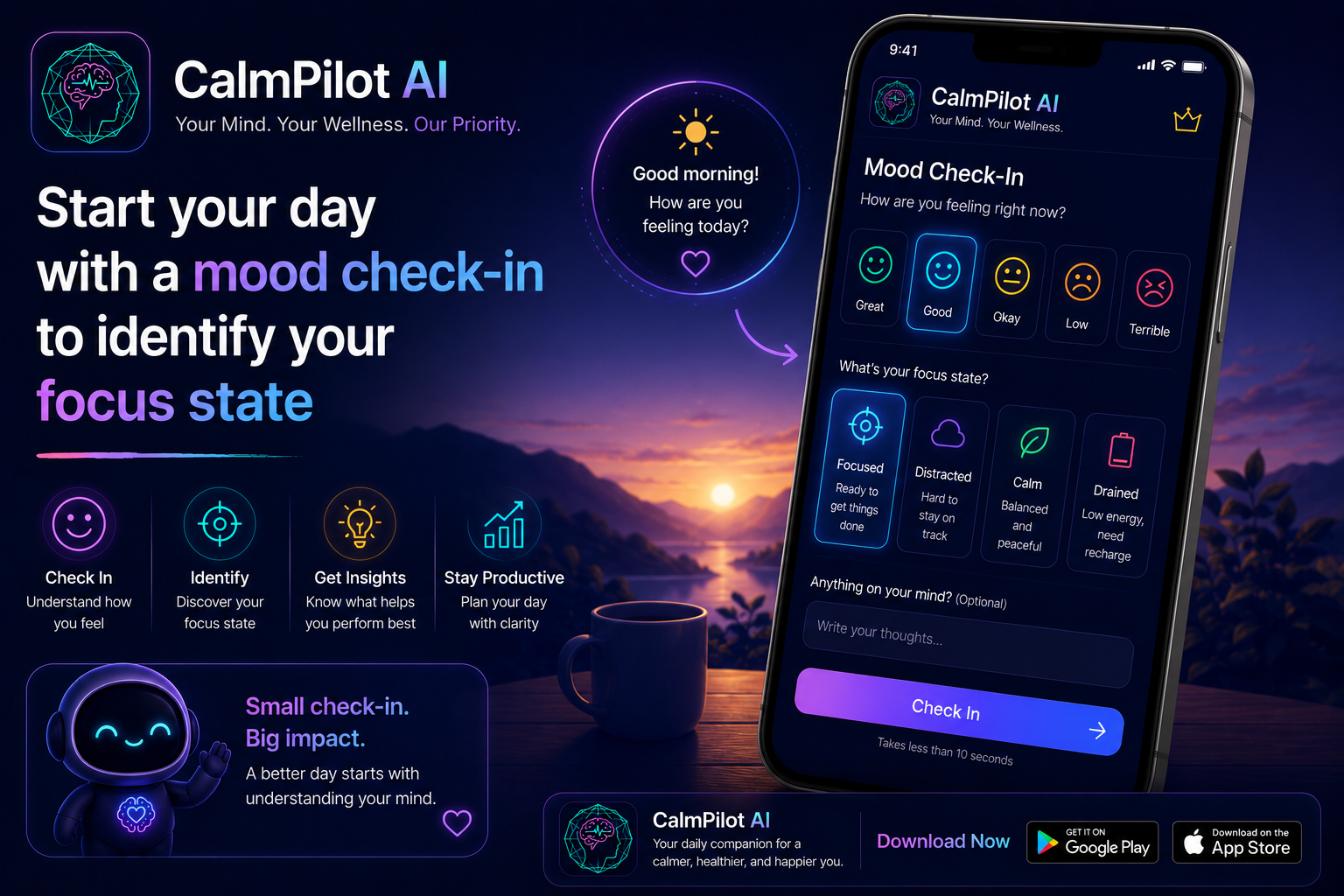
This is the one most people skip. Focus isn’t just a cognitive function — it’s deeply tied to your emotional state. Anxiety narrows attention to threats. Low mood flattens motivation. Unresolved stress consumes working memory in the background, like apps running silently on your phone.
A daily mood check-in — even a 10-second one — makes the connection visible. When you notice that your three worst focus days this week all followed poor sleep or unresolved tension, you have actionable data rather than vague frustration.
CalmPilot’s mood tracker and Milo companion are built exactly for this: understanding the emotional weather that either supports or undermines your ability to concentrate. When you know your patterns, you can work with them instead of against them.
The Bottom Line
Focus isn’t something you either have or you don’t. It’s the downstream result of sleep, movement, environment, nutrition, and emotional regulation all working together. Fix one and you’ll notice a difference. Fix several and your capacity for deep work changes significantly.
Start with the one that costs the least effort and delivers the most obvious return for you. For most people that’s environment design — remove the distraction before it happens. Everything else builds from there.